
Program
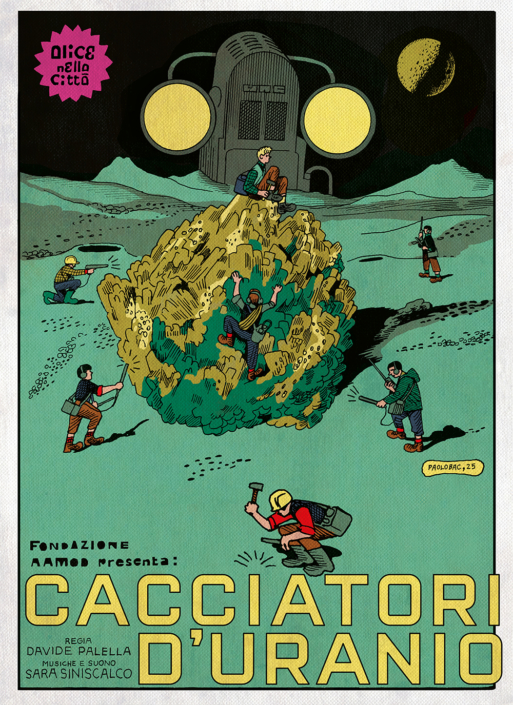
Cacciatori di Uranio – Uranium Hunters
By Davide Palella and Sara Siniscalco (2025), 19 min.
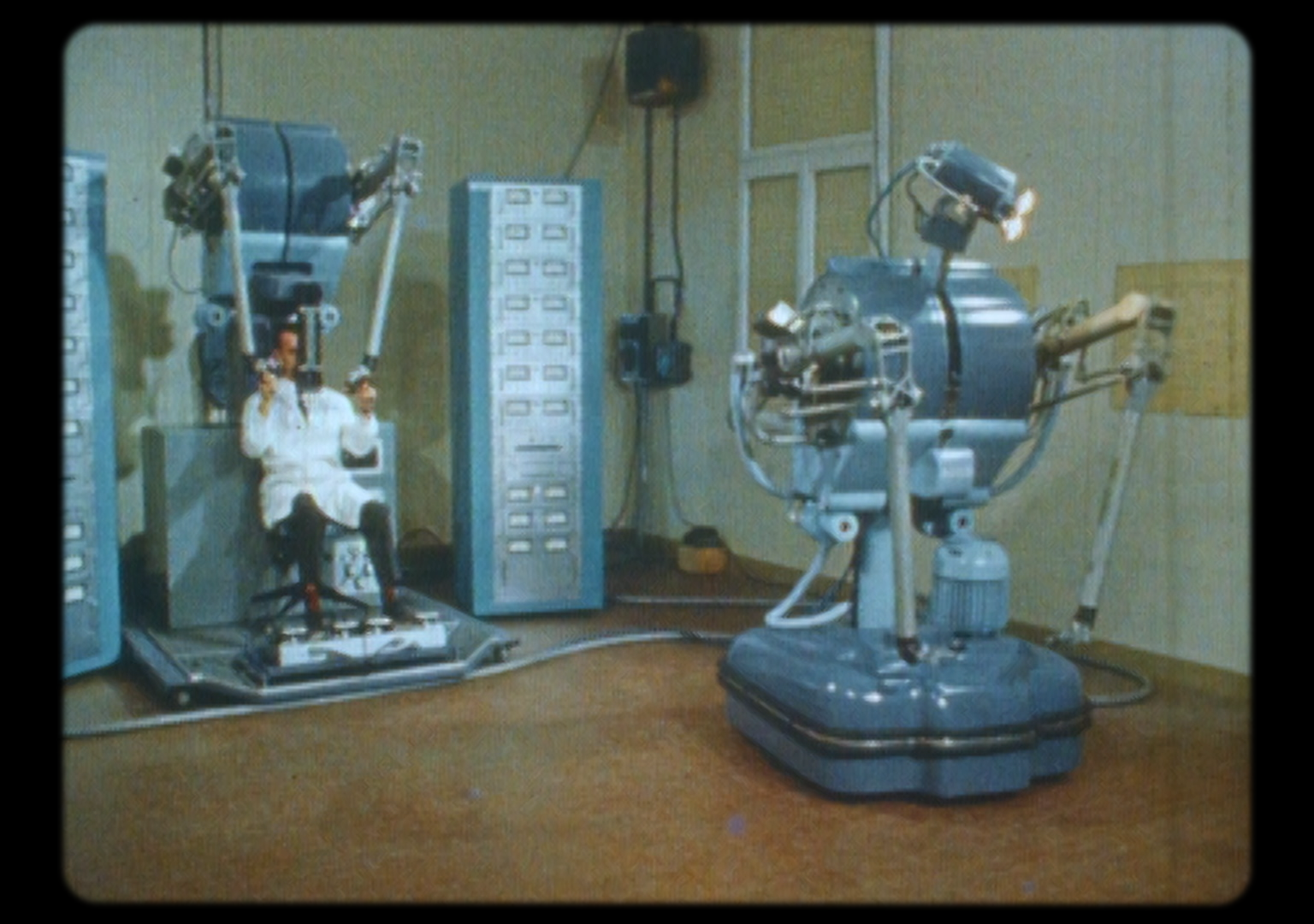
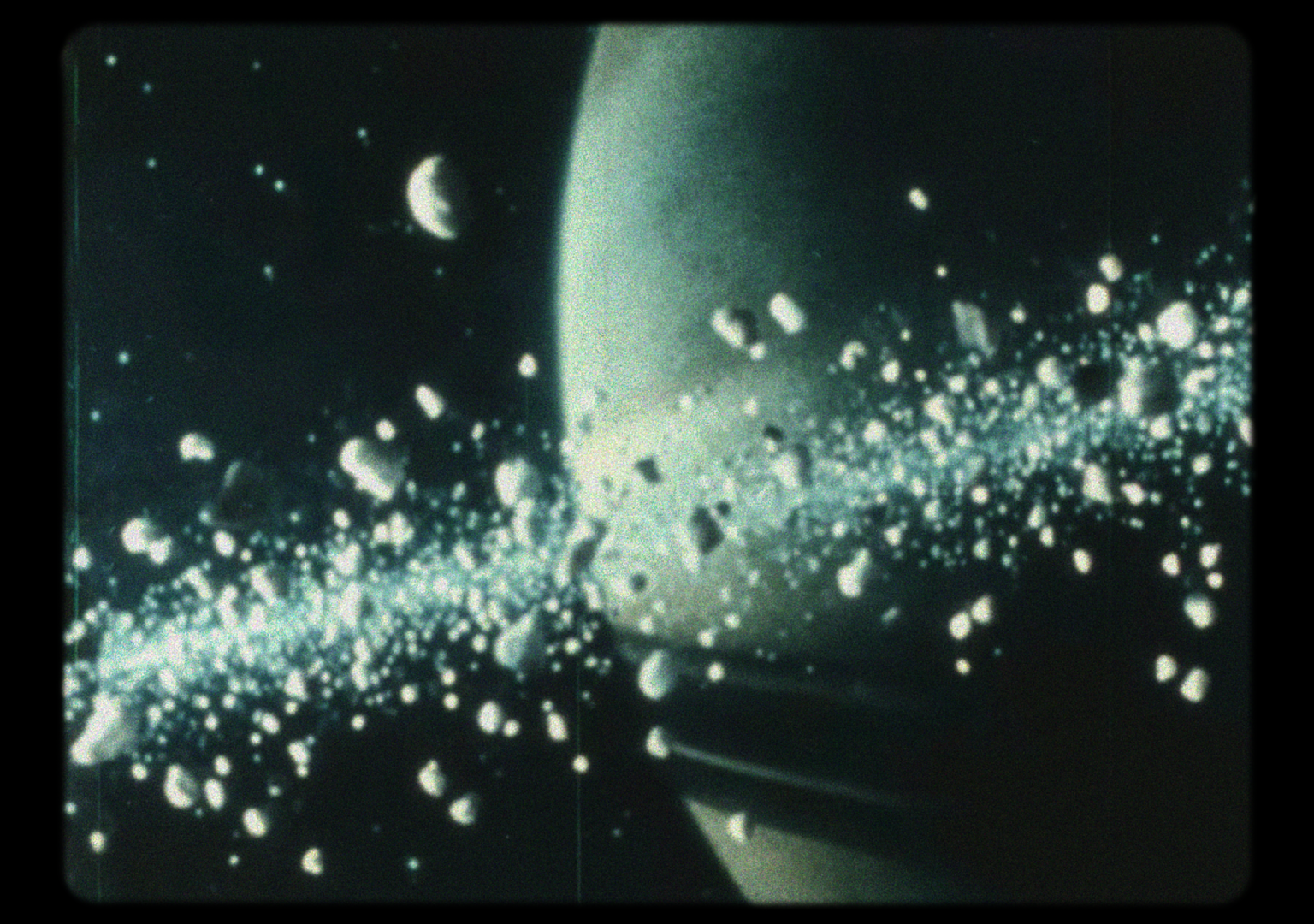
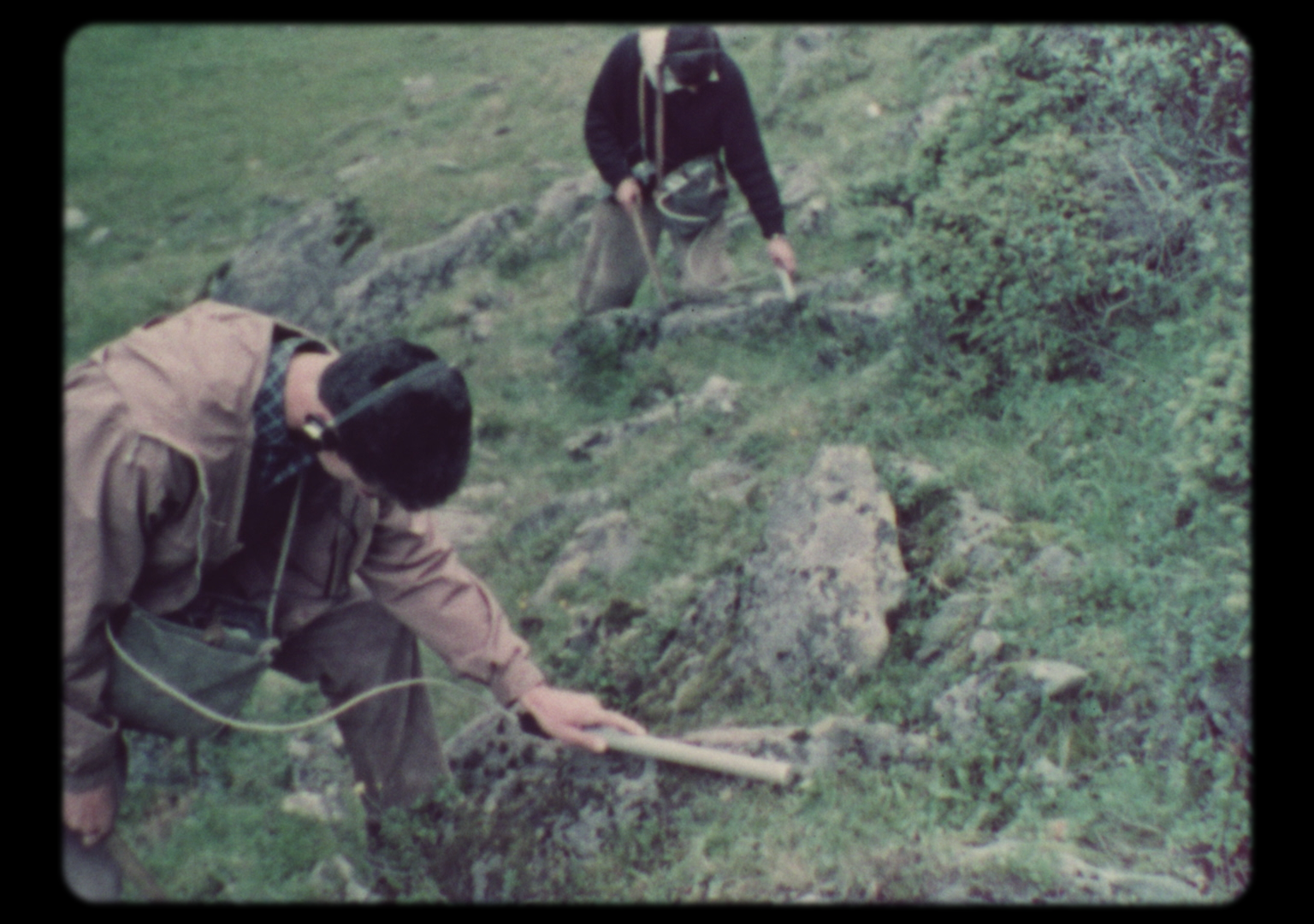
Earth, the year 2960. A group of uranium prospectors returns to the blue planet in search of the precious metal. The crackling of a Geiger counter leads one of them deep into a cave. There, the explorer discovers an ancient relic from the Old World, awakening it from a sleep that has lasted for centuries, perhaps even millennia.
A found-footage film created, among other sources, from archival material from the Italian Comitato Nazionale per l’Energia Nucleare and produced by the Archivio del Movimento Operaio e Democratico as part of the Suoni e Visioni artistic residency (see below).
For more information about the film, click here.
Davide Palella has directed several short films, which have been screened at festivals including the Locarno Film Festival, Festival dei Popoli and ZINEBI. Over the years, he has worked alongside directors such as Michelangelo Frammartino and Pedro Costa, and has taken part in development programmes including Biennale College Cinema.
Cadavres exquis
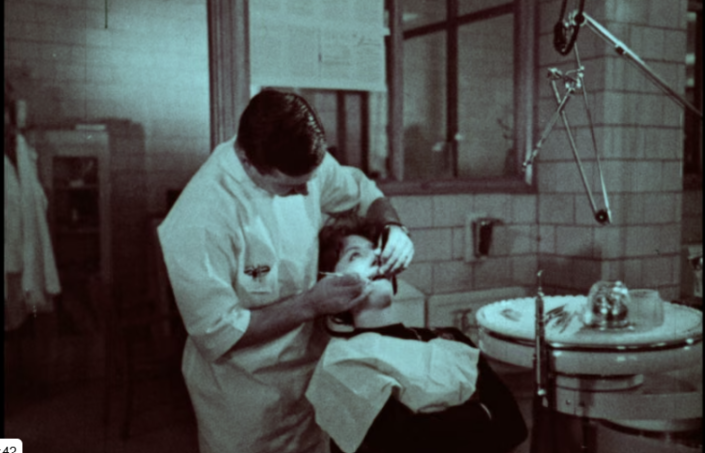
We are presenting three re-edited films from the Cadavres exquis project, a “potential cinema workshop” (OUCIPO), a laboratory dedicated to the preservation and experimental creation of scientific and educational cinema. The project was initiated by the journal Hors champ in 2021 and has since benefited from the close collaboration of the Partenariat international cinEXmedia, Laboratoire CinéMédias, CRIalt, Vocavie, the Bibliothèque des lettres et sciences humaines, and the Division of Archives and Information Management at the Université de Montréal.
From the 1940s through to the 1980s, Université de Montréal built up a significant collection of scientific and educational films in 16mm format. Cadavres exquis seeks to rediscover this collection and recognise its importance, making part of this vast body of material accessible in order to open up its epistemological, critical and poetic potential.
Extraction
By Florence Audet and Félix Caraballo, 1’42”, Canada, 2025
Mues
By Antonin Gougeon-Moisan, 3′, Canada, 2025
But perhaps there is more than a simple analogy?
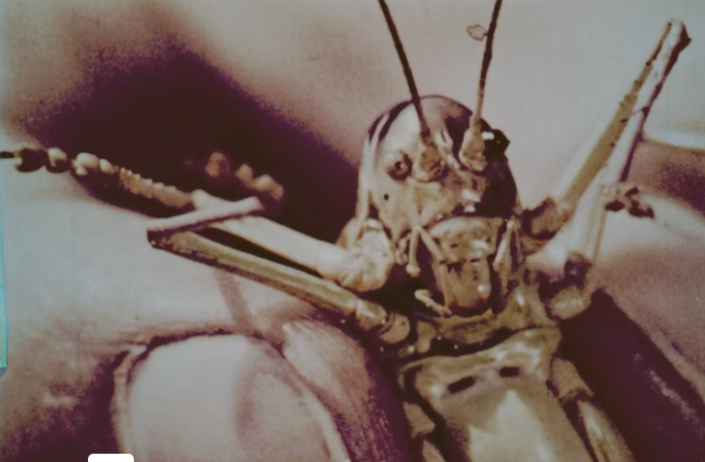
Mues seeks to foster an empathetic relationship with insects. How can we move from disgust to allowing them to live, from phobia to coexistence?
The film is composed of excerpts from four films in the 16mm collection of the Bibliothèques de l’Université de Montréal: Le monde sonore des sauterelles, R.G. Busnel (1956); Alerte aux insectes, Shell Film Unit (1975); Music Research, Dr. C. Spohn (1969); and Le monde des insectes, J.V. Durden (1960).
A pas de loup
By Samy Benammar, Canada, 2’36”, 2022
Zoom Out Production
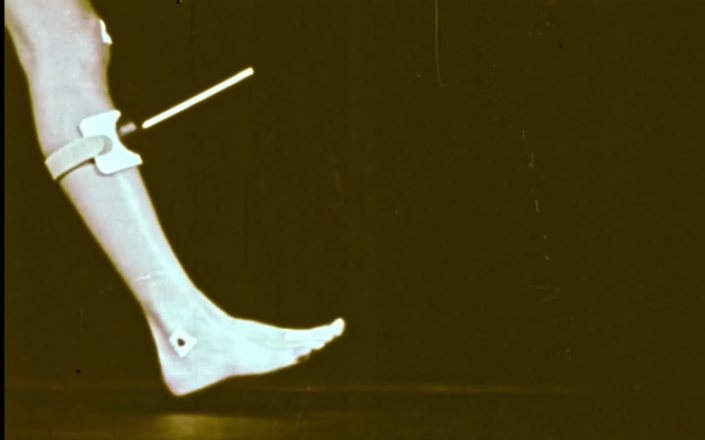
A remix by Samy Benammar of the film The Biomechanics of Walking (1978), set to an original musical composition by the filmmaker.
Minute Bodies: The Intimate World of F. Percy Smith
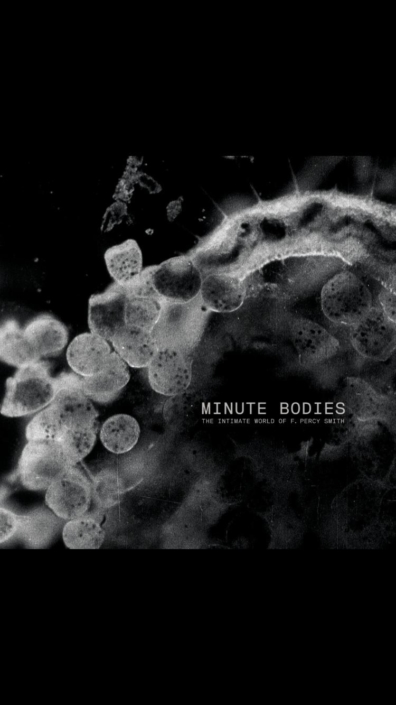
We are pleased to present two films from Minute Bodies, a film editing and musical composition project paying tribute to the remarkable work and achievements of naturalist, inventor and pioneering filmmaker F. Percy Smith. Active in the early 20th century, Smith developed a range of cinematographic and microphotographic techniques to reveal the secrets of nature in motion. His films are preserved in the archives of the British Film Institute.
Minute Bodies is an interpretive montage that combines Smith’s original images with a contemporary soundtrack, creating a hypnotic, dreamlike landscape that feels both strange and familiar.
At the heart of the project is the group Tindersticks, with contributions from Thomas Belhom (percussion) and Christine Ott (ondes Martenot and piano). The film also features David Coulter (musical saw and nose flute) and Julian Siegel (saxophone). The recording and mixing were carried out at the band’s studio in France.
“My main objective with Minute Bodies – The Intimate World of F. Percy Smith is to allow Smith’s work to breathe and exist in the present. Smith was a major and unique figure. His work transcends the constraints of his time and teaches us today about patience, commitment, ingenuity and determination.”
Stuart A. Staples, director
“Today, the world sacrifices everything to speed; stillness seems to be regarded as an undesirable condition, to be eliminated by every means that applied science can devise. And this state of affairs does not encourage the emergence of individuals capable of finding fulfilment in exploring the hidden beauties of nature.”
F. Percy Smith
Directed by: Stuart A. Staples
Photography and animated sequences: F. Percy Smith
Editing: David Reeve and Stuart A. Staples
Original editing: Mary Field
Produced by: Stuart A. Staples and David Reeve for Lucky Dog Inc. and Studio Moe
Original music: Tindersticks with Thomas Belhom and Christine Ott
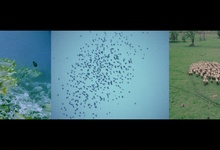
Two Short Films Celebrating Biodiversity and the Beauty of Complex Systems
In partnership with LightCone, an organisation dedicated to the distribution and preservation of experimental and analogue film, we will close the day with two short films celebrating its two main themes: biodiversity and complex systems.
Similitudes
By Roger Vilder, 2’19”
“Two sources have always guided my research: my insatiable curiosity and a close attention to the natural phenomena I have witnessed.”
(R.V.)
A Perfect Storm
By Karel Doing, 2022, 3′
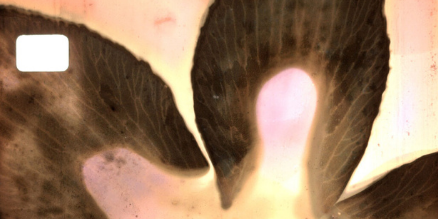
A Perfect Storm is a landscape film — or, more precisely, a landscape printed onto a film emulsion. The artist used seeds, small flowers and other tiny plant materials gathered from plants cultivated in his garden, as well as from more wild species found in a nearby nature reserve.
The actors of the Cinema of Reuse
British Film Institut Archives
The BFI holds one of the world’s largest and most significant collections of films and television programmes. Its teams of experts are dedicated to preserving and developing this collection for future generations, while also working to make it widely accessible to audiences today.
LightCone
IGHT CONE is a non-profit organisation dedicated to the distribution, promotion and preservation of experimental cinema in France and internationally.
As part of its activities, LIGHT CONE distributes films entrusted to it on deposit, helping to promote both these works and experimental cinema more broadly. Its primary mission is to enable cultural organisations such as associations, cinemas, museums, universities, galleries and festivals to screen works from its collection, whenever possible using their original film format.
Fondazione Archivio Audiovisivo del Movimento Operaio e Democratico
Established in the late 1970s, the Fondazione Archivio Audiovisivo del Movimento Operaio e Democratico (AAMOD) works in the field of audiovisual media — film, television, multimedia, film and photographic archives — with the aim of contributing to the development and dissemination of the history and collective memory of social movements and their protagonists.
The Foundation’s first president was Cesare Zavattini, a key figure in Italian Neorealism, who held the position for many years.
The Foundation has always been active in researching, collecting, producing and preserving historical audiovisual materials, archives, news footage and materials related to narrative reconstruction.
It organises research and study projects, conferences, seminars, screenings and exhibitions devoted to questions of history and society, as well as to the relationships between cinema, imagination and memory.
The Foundation is also behind the Unarchive Found Footage Fest and artistic residencies such as Suoni e Visioni.
UnArchive – Suoni e Visioni
Reinterpreting music and archival images through the AAMOD artistic residency
The “UnArchive” constellation — a term borrowed from computing, literally meaning “to unarchive” — brings together the various initiatives developed by the AAMOD Foundation around the creative reuse of archival films. These films are considered not only as historical documents (in the sense traditionally associated with so-called “archive cinema”), but above all as living cinematic materials, capable of generating new meanings and interpretations when brought into dialogue with film forms and concepts different from those of their original context.
Within this framework, the artistic residency “UnArchive. Sounds and Visions” explores the role of music as a means of research and sensory expansion in its relationship with archival cinema, as well as the ability of musical composition to re-semanticise and intensify images on film, whose meaning may otherwise appear permanently fixed by their status as historical, testimonial and evidentiary documents.
For more information: unarchive.it/unarchive-suoni-e-visioni/
Université de Montréal
The Department of Art History, Cinema and Audiovisual Media at the Université de Montréal, through the work of André Habib, Professor of Film Studies, contributes to the dissemination and creative reuse of film archives. His research is notably developed through the Cadavre exquis project, which explores the creative possibilities offered by archival images.