About

What are the connections between food and biodiversity? What solutions can scientists offer to help preserve biodiversity in natural habitats — and the biodiversity that ends up on our plates?
And how can we grant rights to biodiversity and the environment?

Introduced by a screening of the archival short film Cheese Mytes (1927), preserved in the archives of the British Film Institute, this roundtable will take the emblematic case of Penicillium camemberti, the fungus essential to the production of Camembert, as a starting point to explore how the standardisation of living organisms can weaken essential ecological balances.

How, then, can we address the emerging challenge of justice for the living world?

The roundtable will feature Tatiana Giraud, evolutionary geneticist (IDEEV, CNRS), and Dorian Guinard, legal scholar at Université Grenoble Alpes. The discussion will be punctuated by excerpts from CNRS films.

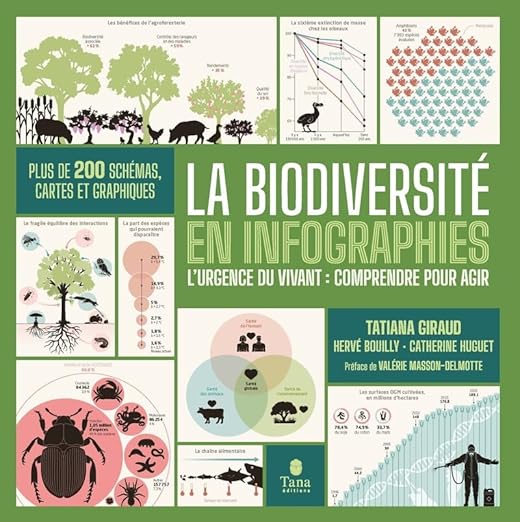
The roundtable will also provide an opportunity to discover Tatiana Giraud’s popular science book, Biodiversité en Infographies, which offers an accessible and visual perspective on biodiversity.

Books will be available for purchase throughout the day, with a book signing session.

About the films

Cheese Mites
By F. Martin Duncan, 2’, 1903

What’s in your cheese? The microscopic mites found in it may seem rather unappetising today, but in 1903 they caused quite a sensation, in one of the first scientific films presented to the public in Britain.

During the roundtable, excerpts from the following films will also be screened:

What If Camembert Disappeared Too?
By Francesca Barbieri

With a quirky tone and featuring three remarkable female researchers, this documentary explores the imminent disappearance of Camembert. Through this unexpected example, the film invites us to urgently rethink our understanding of and relationship with biodiversity.

The Death of Camembert
By Julien Dechamps and Sébastien Chavigner, CNRS Images

Will the self-proclaimed land of cheese soon have to bid farewell to some of its national treasures? Camembert, Brie, Roquefort… Cheeses are the result of thousands of years of domestication, much like dogs or horses: the domestication of moulds and other fungi. In the process, we gradually selected the strains that produced the tastiest and most appealing cheeses. But have we gone too far, to the point where we risk no longer being able to produce them? Through the story of cheese, a much broader history of evolution comes into view…

About the book

Biodiversity in Infographics
By Tatiana Giraud
Hervé Bouilly and Catherine Huguet

As warnings about the state of the living world continue to multiply, the book explores our dependence on ecosystems and the interconnected web of life, which is directly linked to our food: what ecological balances does our food depend on?

The book will be available for purchase and signing during the day.

Porjection / Roundtable

Auditorium
14H30

PARTICIPANTS

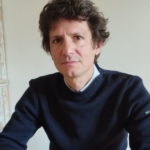
Tatiana Giraud

Tatiana Giraud is an agricultural engineer and a CNRS research director at the Ecology, Systematics and Evolution Laboratory at Université Paris-Saclay. She is a member of the French Academy of Sciences and was a visiting professor of the annual Biodiversity and Ecosystems Chair at the Collège de France in 2021–2022.

Dorian Guinard

Dorian Guinard is an Associate Professor of Public Law at Université Grenoble Alpes. A scholar and lecturer, his publications focus on environmental law, particularly pesticides and protected species.